
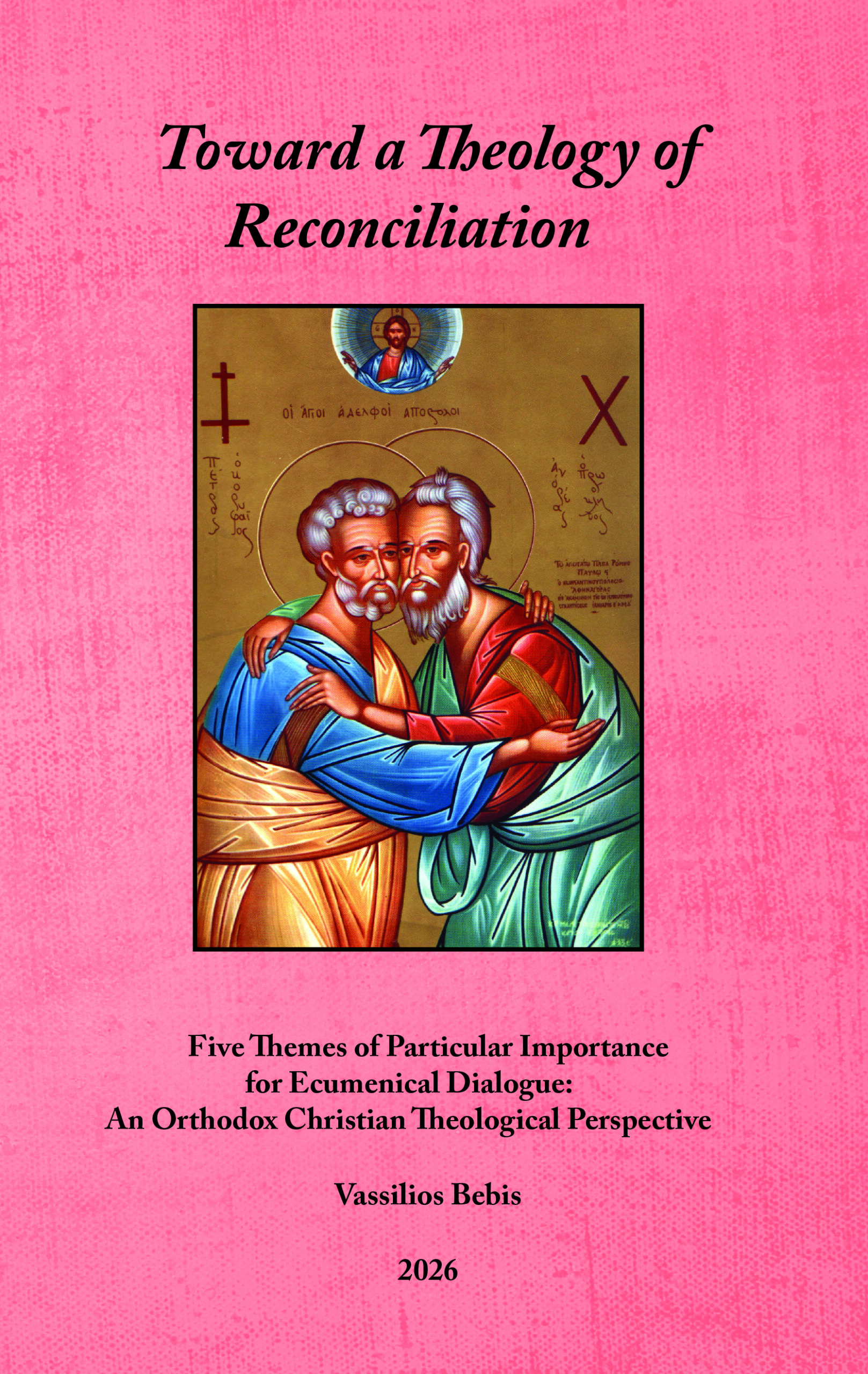
Overview of the Five Themes
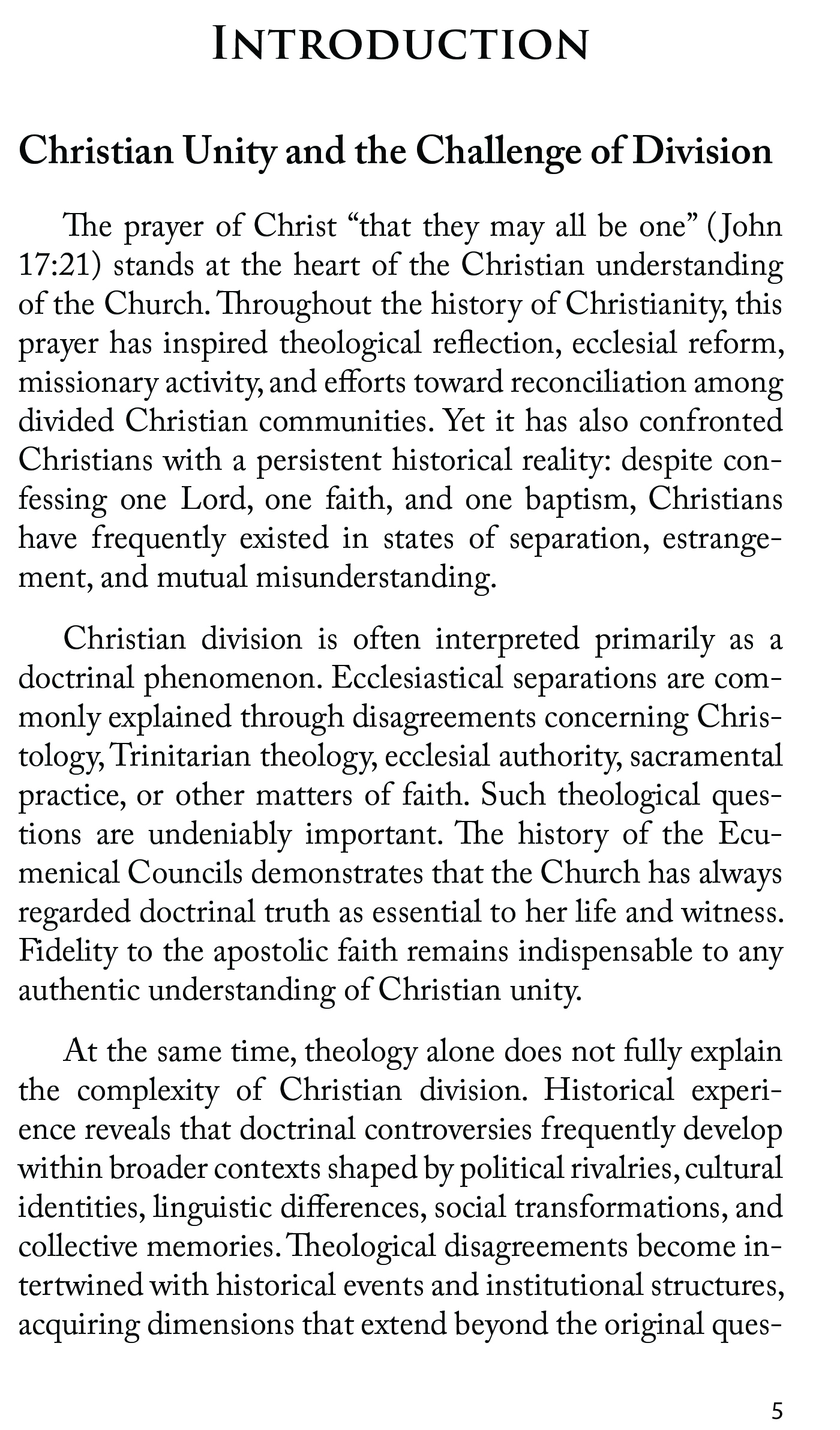
The first chapter examines the apostolic and patristic foundations of ecclesial communion through the examples of Polycarp of Smyrna and Irenaeus of Lyons. Their responses to disagreement within the early Church provide important models for preserving unity without sacrificing doctrinal integrity.
The second chapter explores the historical and sociopolitical dimensions of Christian division. By examining selected moments in Christian history, it demonstrates how theological controversies often become intertwined with political power, cultural identity, and social transformation.
The third chapter considers the mutual lifting of the anathemas between Rome and Constantinople in 1965 as a significant example of ecclesial rapprochement. Although the event did not restore full communion, it illustrates the possibility of overcoming inherited hostility while preserving theological convictions.
The fourth chapter addresses the relationship between language and doctrine. Through an examination of the Filioque controversy and the Christological disputes surrounding Chalcedon, it investigates how linguistic and conceptual differences have sometimes contributed to ecclesial division.
The fifth chapter analyzes the ecumenical theology of Nikos Nissiotis, one of the most influential Orthodox voices in twentieth-century ecumenism. His emphasis on pneumatology, eschatology, and ecclesial communion provides a constructive framework for understanding Christian unity as both a present reality and a future vocation.
Only logged in customers who have purchased this product may leave a review.
Reviews
There are no reviews yet.